



- Add to bookmarks
-
0BookmarksBookmark added. Bookmark removed.
- Quicklinks
The basics of our colour design
#1
The primary colours Liebherr Yellow, Liebherr Black and Liebherr White provide clear colour coding for the brand.
#2
Liebherr Yellow provides the functional focus, highlights elements and represents the sender.
#3
Liebherr Steel grey shades provide differentiation between elements and can be used freely.
#4
The secondary colours are used thematically or for specific applications.
#5
It is important to ensure a coherent overall look and feel and recognition for the brand, whilst following the colour weighting.
#6
All colours are used as opaque colours. No transparency is allowed, with the exception of mash materials.
Text and colours
The standard colour of our texts is always black. Alternatively, white text should be used on images or dark backgrounds. When using our secondary colours as background colour, the font colour should be chosen as shown in the colour table: Colour table secondary colours. (PDF, 67 KB) White text on a yellow background is not permitted. Coloured text may be used in exceptional cases (e.g. fun facts) in consultation with the division Group Communication & Brand Management.
Material and colours
The defined colour shades can only be represented approximately in materials. In lacquered or coated surfaces, the colours can be represented exactly according to the colour systems (PDF, 67 KB).
We use materials and colour equally to create atmosphere.
Colour combinations
The recommended combinations should be followed when using multiple secondary colours. As well as the Liebherr Steel shades, Slate and Terra are particularly suitable for expressing the brand character. They can be used with or without Liebherr Yellow.
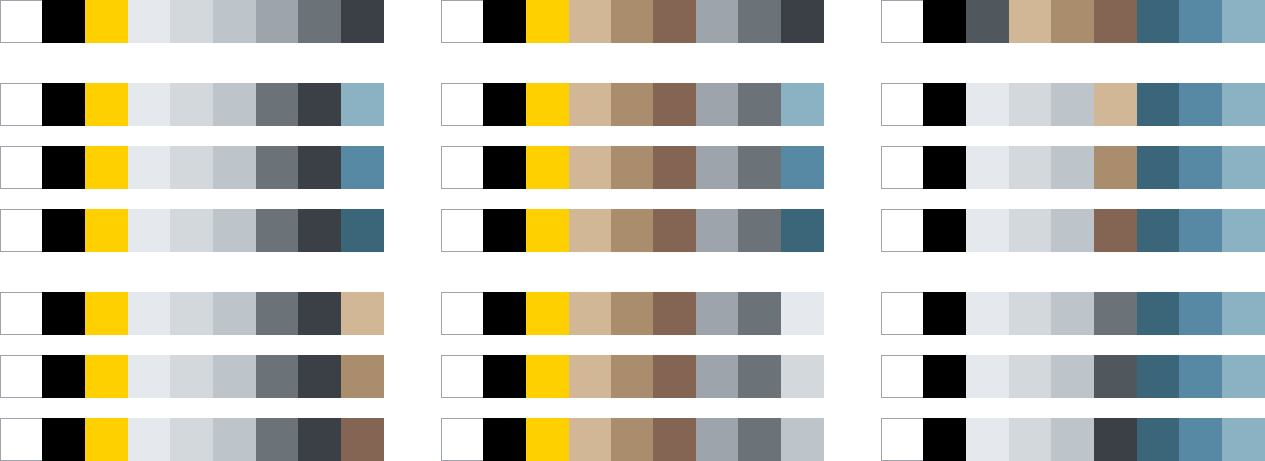
Clay, Leaf and Ruby are only used thematically or for specific applications. We recommend only combining these shades with Terra, Slate Black or the Steel shades.
The Steel shades can be combined freely with all colour ranges.
Since the secondary colours Liebherr Slate and Liebherr Clay are used in physical space for nuance, a combination of both colours is impossible.
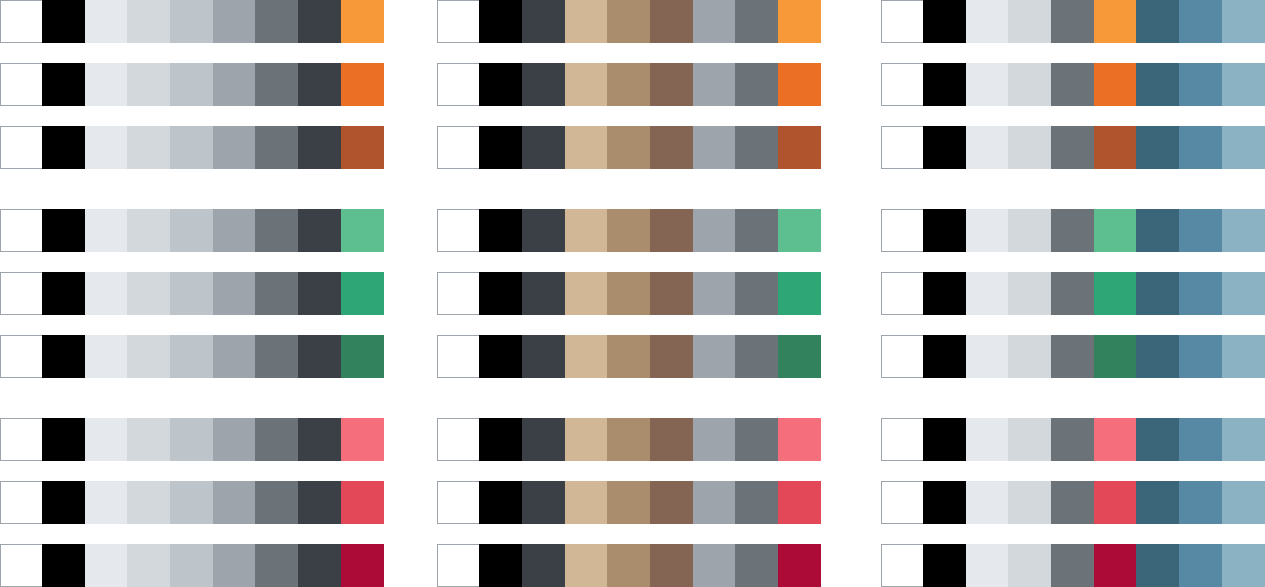
Application examples
The following illustrations show coherent colour weightings and ratios and a good combination of the Liebherr colours:
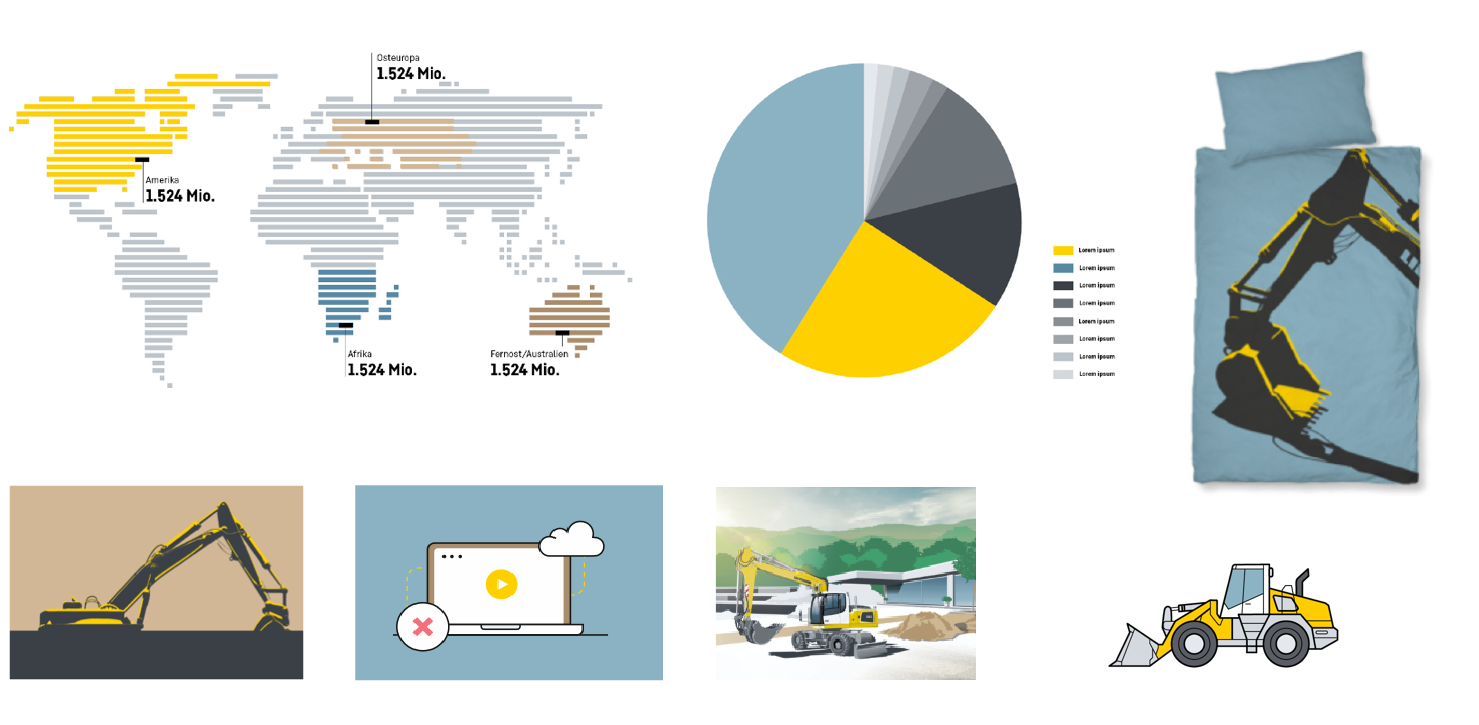
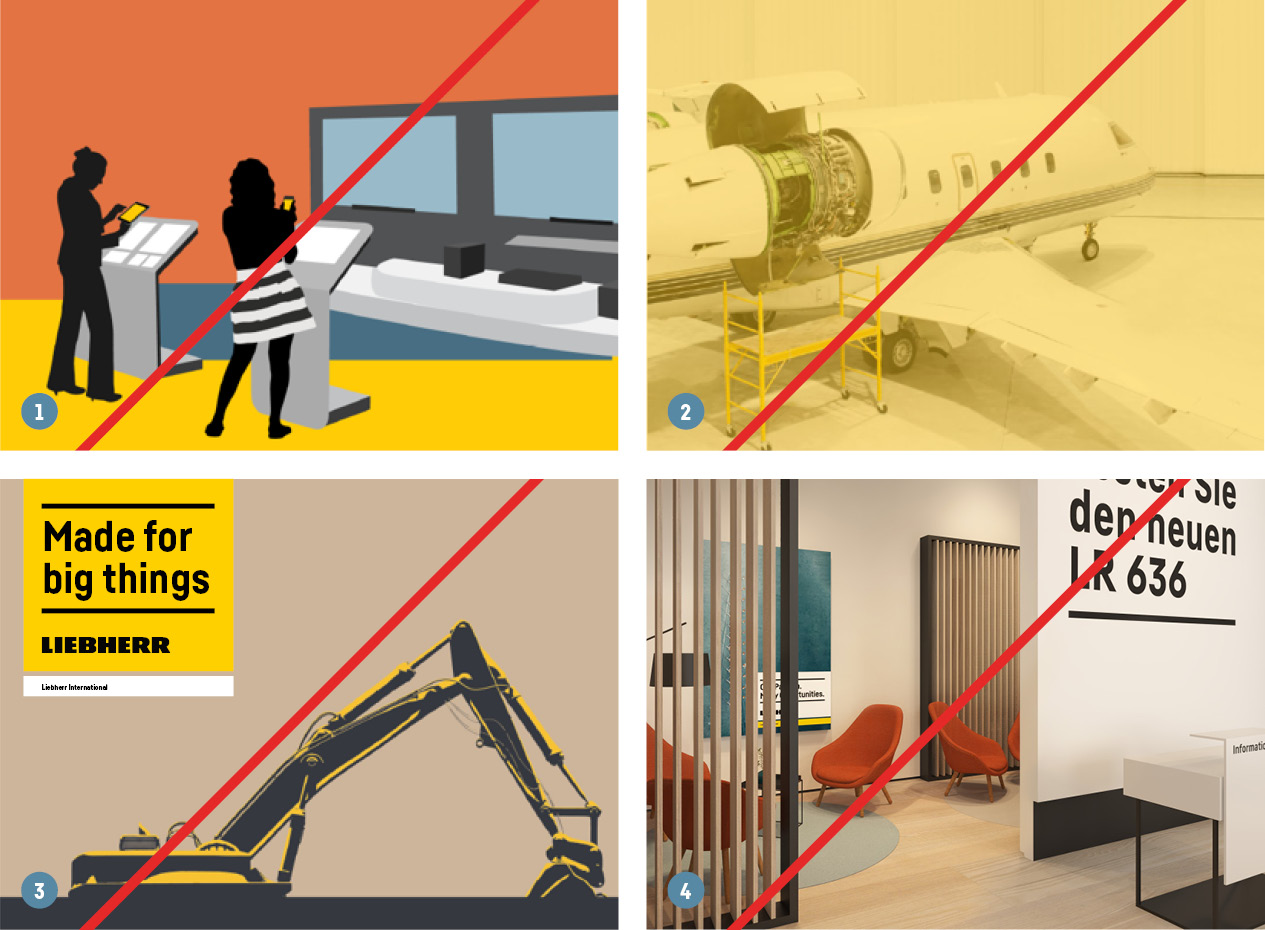
Don’ts
1 Don’t use more than three secondary colours in a composition; wrong colour weighting
2 Don’t use transparencies or areas of colour with reduced opacity (with the exception of mesh materials)
3 Don’t use Liebherr Yellow in a brand banner
4 In physical space, the combination of Liebherr Slate and Liebherr Clay is ruled out due to the communicative nuance
Downloads
Brand colours table
Overview of Liebherr colour values (PDF, 67 KB)
Colour palettes InDesign
Liebherr colour pallet (ZIP, 3 KB)
Contact
If you have any open questions please use the contact form available at the following link or visit our LHO Service Desk (only for Liebherr employees).